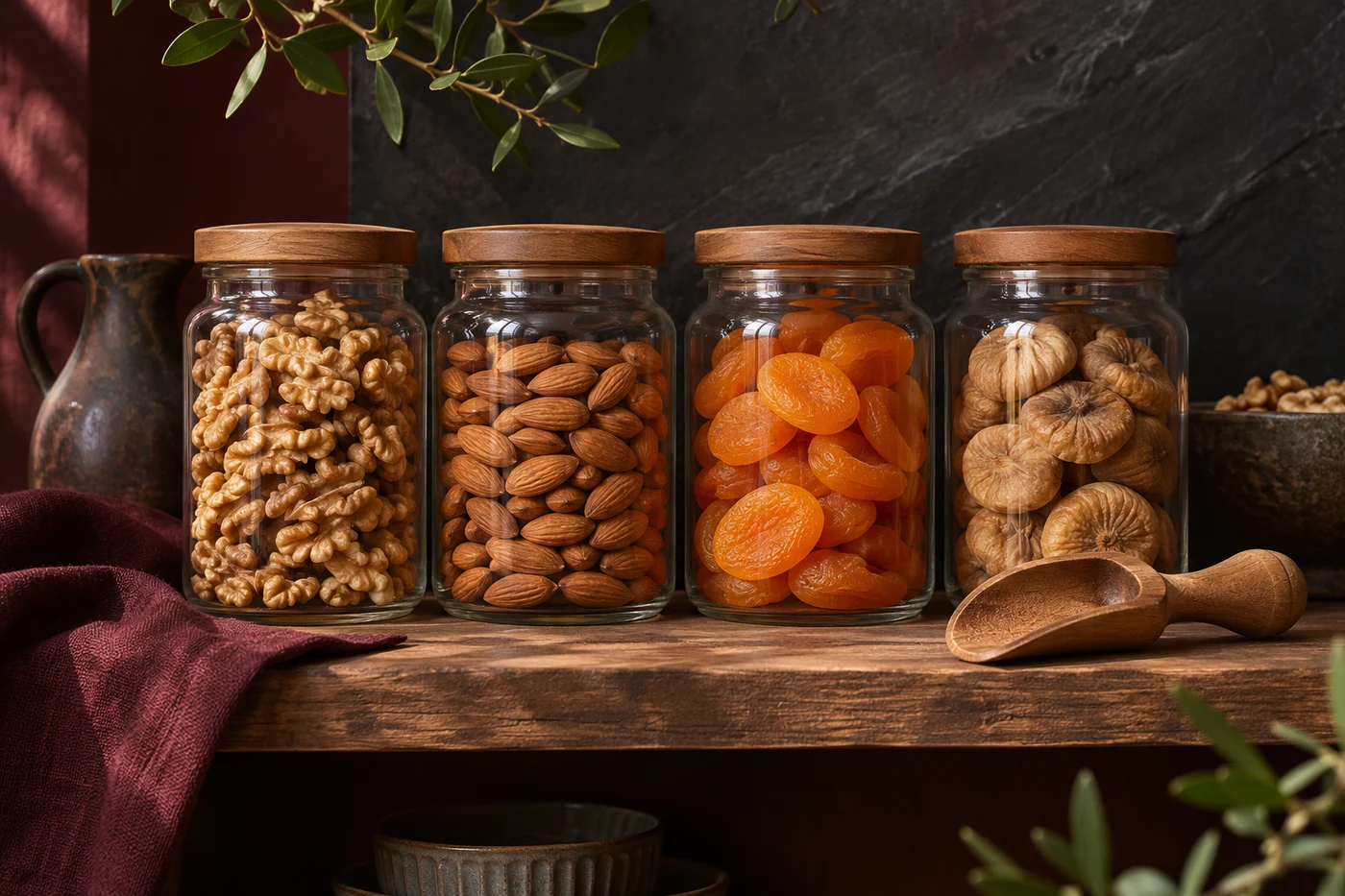
If a large packet of walnuts or dried fruit takes weeks to finish, split it into smaller containers as soon as you open it. Keep one portion within reach and put the rest somewhere cool and dry. Smaller portions limit how often you open the reserve.
Give walnuts and almonds their own jars
Use clean, dry containers with tight lids. Store walnut kernels and almonds separately so you can track when each pack was opened and keep their labels and allergen information. A cool, shaded shelf works for the portion you use regularly. In a warm kitchen, use a tightly sealed container in the fridge for the reserve and follow the pack directions.
Keep dried apricots and figs away from steam
Keep dried fruit away from the kettle, stove and dishwasher. Label the container with the opening date and the best-before date from the packet. Use a dry spoon or clean, dry fingers to take a portion. Tight containers and cool, dry storage help protect dried food from moisture and pests. National Center for Home Food Preservation storage guide.
Build a pantry you use
Keep a small jar of walnut kernels for salads and oats, sliced almonds for tea, and chopped dried fruit for porridge and bakes. Check the reserve before buying another packet. If the room is humid, open the reserve only when the small jar needs refilling.
Jammu and Kashmir is a major walnut-growing region. When shopping for its orchard foods, check the product description for the stated variety and the label for the pack’s storage guidance. APEDA overview of Indian walnuts.
Explore our walnut kernels, Mamra almonds and dried apricots.